
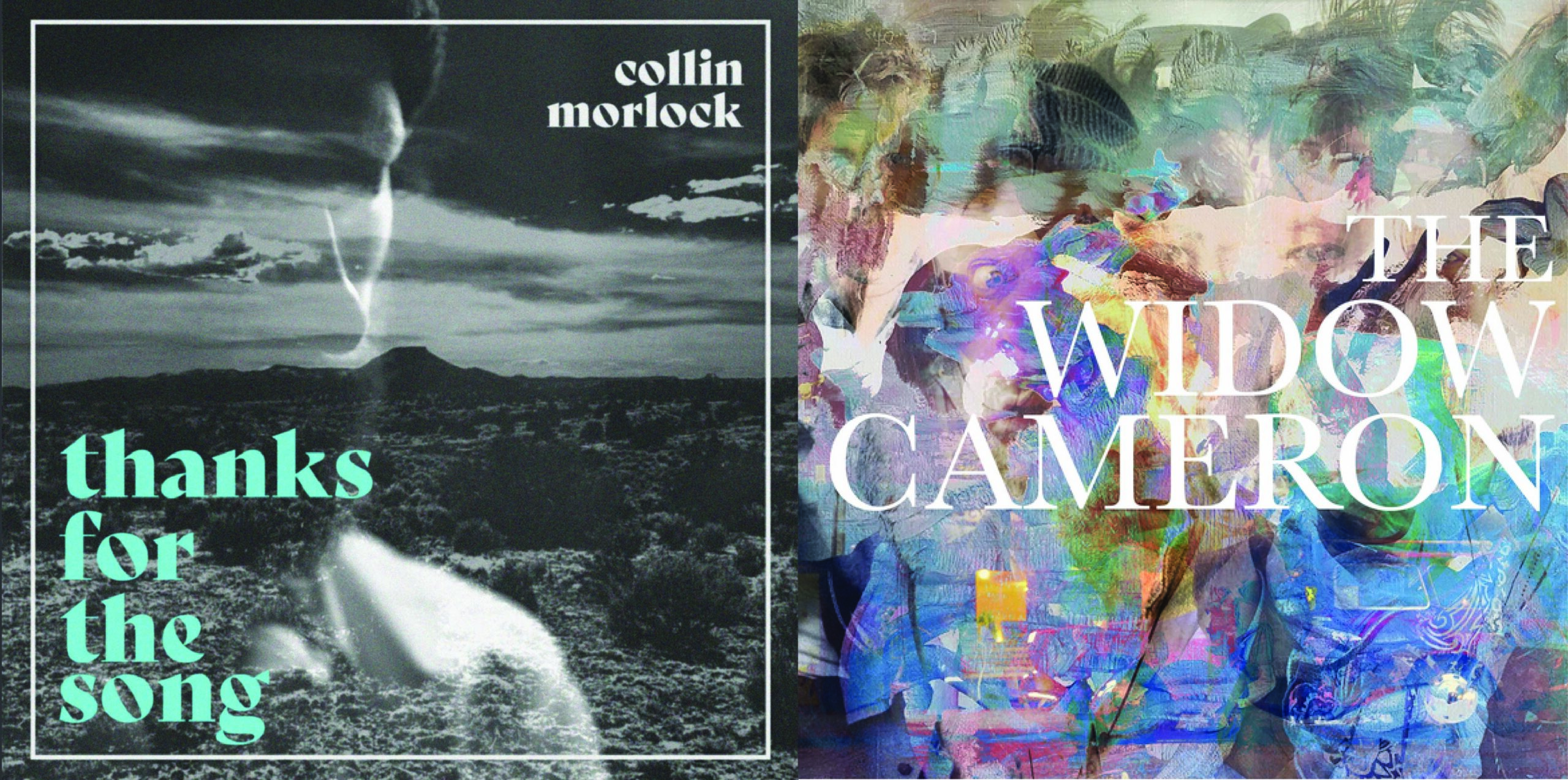
Collin Morlock, with Cameron McGill opening, performed at The One World in Downtown Moscow on Saturday, April 4.
Cameron McGill has a classic look. Scruff on his jaw, an old worn cap, a folkie’s boots, and a torn denim jacket with pins on the lapel. His rough, lithe voice floated through the coffee shop. He is an animated singer: shaking his head and bending his knees to the beat, contorting his face in a way that makes the music much more emotional. An addictive performer. His hair was slicked back at 6pm and within a few minutes was unkempt and falling around his wind-worn face. He touts an awkward, unrefined presence that reflects a certain Muscovite beauty. He was funny, too. “You all still doing homework?” he asked to the upper balcony of the One World Cafe, “it’s Saturday night, you need to stop.” His playing is particular and driving. His lyrics struck me the hardest. My favorite songs were “Bloodshot Eyes” from their self-titled album, and “Heavyweight,” which is a new release from The Widow Cameron. He holds a Creative Writing Master of Fine Arts from The University of Idaho, and writes poems titled with coordinates about Benzedrine and moonlight. I’m being dense but the words really are beautiful. He works now as a Scholarly Associate Professor at Washington State University, focusing on creative writing, poetry, and song writing. His closing song, “Control,” used scorching lyrics about individuality and humanity. He stomped and rocked and cried and with a curt “thank you” got off the stage. He’s an artist who plays well with emotion in his words and movements. I’m going to keep an eye on him, and so should you.
Collin Morlock is a performer. He wore a teal suit that matched his guitar complete with a bolo tie and cowboy hat, “in the beginning there was nothing, and then there was this suit,” he said. That was only the beginning of his part-stand-up-part-angelic-music performance. On his merch, he subtitles his name with “another one of them singer-songwriter types.” We see a lot of them singer-songwriter types in Moscow, but somehow, I never get tired of them. Still the same, Morlock’s self-awareness charmed me. His songs play with dissonance but maintain a charming, subtly sad storytelling country air. His voice is warbling and his lyrics are clever and sweet. He embraced a Morricone wa-wa, and the basslines he played on his guitar told saloon and prison stories. My favorites he played were “Waiting For Your Love,” and “Looking For The Spirit.” He’s got range, too. He played delicate and hard on his guitar, then later sat down at a keyboard for a synth ballad. He’s living in Wyoming now, but he went to UI and grew up in Lewiston. He used to work at the One World. The audience loved him. He played three encores (including a cover of “Goodnight Irene”). As one audience member put it, “I think he’s going to be famous someday.” Morlock has been touring the Western US since May 2025.